


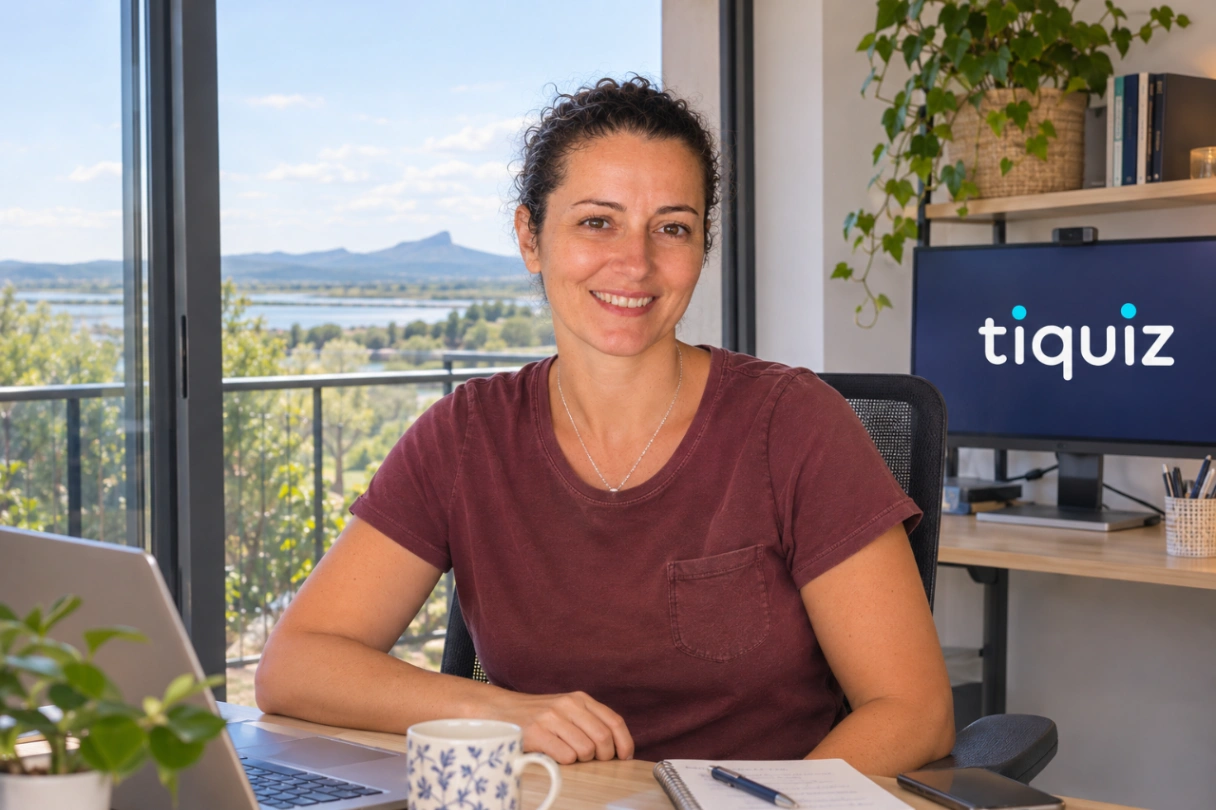
I'm not a developer. I'm a nurse.
Well, I used to be.
After three spinal surgeries left me in a wheelchair, I had to reinvent my career. I knew absolutely nothing about building software, but I was determined to create a new life for myself.
I started with affiliate marketing. Over six years, I learned about sales funnels, email marketing, automation, and all the little things that make an online business work.
And I kept running into the same problem.
I wanted to build marketing quizzes that didn't just collect email addresses, but actually helped entrepreneurs understand their leads and follow up with the right messages.
The tools existed, but making everything work together was often a nightmare. A quiz builder here, an automation tool there, another subscription, another integration...
So I decided to build my own SaaS.
My first attempt? A disaster.
I hired a developer, spent around $30,000, and ended up with nothing I could actually launch.
That was a pretty expensive lesson.
But then AI started changing what was possible.
I thought, why not give it a shot myself?
So I did.
I started learning, experimenting, breaking things, fixing them, and sometimes spending entire days trying to understand why something that worked perfectly yesterday had suddenly stopped working.
One year later, I have a real SaaS.
It's called Tiquiz (https://tiquiz.io).
It uses AI to create marketing quizzes, captures and segments leads, connects directly to Systeme.io and GoHighLevel, and generates personalized email follow-up sequences.
And somehow, 258 people have already signed up.
But here's what I really want to share with other founders.
The best decision I made wasn't choosing a tech stack or adding another AI feature.
It was bringing beta testers on board as early as possible.
I offered my earliest users lifetime access to premium features for a modest one-time payment.
About 10 of them became incredibly involved.
They test things I don't have time to test. They find bugs I would never have noticed. They ask for features I hadn't even imagined.
Sometimes their requests make me want to pull my hair out.
But I absolutely love them.
They've pushed Tiquiz further than I could have taken it alone.
And because they actually use the product in their businesses, their feedback is worth more than a thousand hypothetical feature ideas.
I recently started bringing Tiquiz to the US market, and it was named Product of the Day on MicroLaunch.
For someone who started this journey with no development experience, no investors, and a pretty painful $30K failure behind her, that means a lot.
I'm still building solo. Still learning. Still making mistakes.
But I'm building something real, with real people who care about what I'm creating.
If I could give one piece of advice to someone starting a SaaS today, it would be this:
Don't spend a year building what you think people need.
Find your first users early. Give them a reason to care. Listen to them. Let them challenge your ideas.
And most importantly, make them feel like they're building something with you.
Because in a way, they are.
To all the indie founders here: how did you find your first 10 users? And how much did they change your original idea?