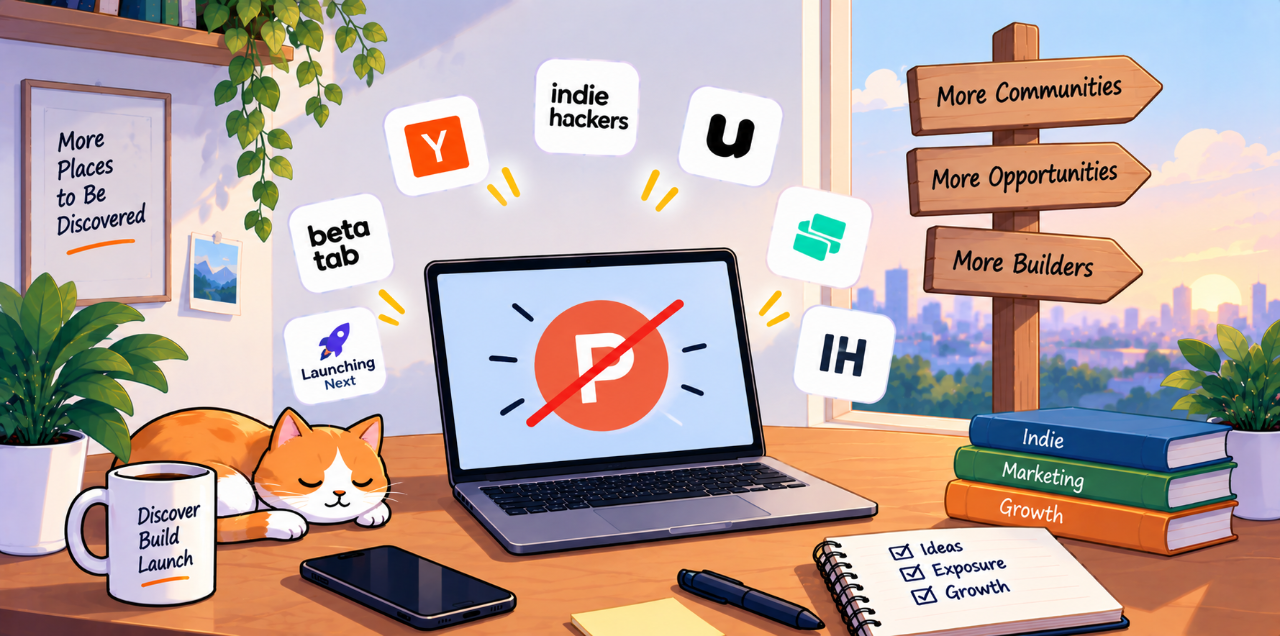
You launched on Product Hunt, got a small spike of traffic, and then... nothing. That's the experience for most indie makers these days. The platform is crowded with polished teams running coordinated hunt campaigns, and a solo builder with a scrappy MVP just can't compete for the front page anymore. If you're searching for product hunt alternatives, you already know the frustration of pouring weeks into a launch that barely moves the needle.
The good news is you have real options now. A handful of platforms built specifically for independent makers now offer what Product Hunt used to: genuine visibility, honest feedback, and a community that actually cares about what you're building instead of just upvoting for karma. Some run structured weekly launch cycles, others focus on long-term audience building through public progress logs.
This list breaks down seven platforms worth your time in 2026, including where each one shines, who it's best suited for, and what kind of traffic and feedback you can realistically expect, and if you want a wider set, there's a longer roundup of launch platforms that work without an audience. We'll also cover why a buildlog approach, documenting your journey rather than launching once and disappearing, tends to produce better long-term results than a single big launch day ever could.
1. Builtbyindies
Builtbyindies is built from the ground up as a home for people who ship products in public, not a place where marketing teams game an algorithm for a front-page spot. It runs on weekly startup launch cycles, so instead of one make-or-break day, you get a recurring window to put your product in front of real users and climb a leaderboard based on genuine engagement, not vote brigading. That structure alone makes it one of the more practical product hunt alternatives for someone launching solo.
A weekly launch cycle beats a single launch day because momentum compounds instead of resetting to zero every time.
How it works
Each week, makers submit their product into the current launch cycle, where the community browses, tries, and upvotes based on what actually works. Alongside the launch, you keep a Buildlog, a running record of milestones, technical decisions, pivots, and growth numbers that other builders and potential users can follow over time. This is where Builtbyindies pulls ahead of a one-shot launch site: your buildlog keeps compounding attention long after launch week ends, and it gives visitors proof you're a real builder, not just a landing page with a countdown timer.
Who it's for
Builtbyindies suits solo founders, indie hackers, and small micro-SaaS teams who want more than a single traffic spike. If you're building an AI tool, a dev tool, a productivity app, or anything across categories like SaaS, marketing, education, or finance, you'll find peers in the same niche browsing the Indie Hacker Network and offering direct, practical feedback rather than generic praise. It's a good fit if you plan to keep building and want a platform that grows with your product instead of forgetting you after week one.
Pricing
Getting started on Builtbyindies costs nothing. You can claim your username, start a buildlog, and enter a weekly launch cycle without paying anything upfront. The karma system rewards you for helping others, upvoting solid ideas, and answering questions in the community, which means the platform's visibility mechanics reward participation over ad spend, a meaningful difference from paid promotion slots on other launch sites.
2. Uneed
Uneed positions itself as a directory-style alternative to Product Hunt, built for makers who want ongoing exposure rather than a single launch day, and it's one of many startup directories worth submitting to. Instead of one big vote-driven event, it functions more like an evergreen catalog where your product stays discoverable long after you submit it, which matters if you're tired of traffic that dries up the day after launch.
Evergreen visibility beats a one-day spike because people find your product on their own schedule, not just launch day.
How it works
You submit your product with a description, screenshots, and a link, and Uneed lists it across relevant categories where visitors browse tools by use case. There's a daily leaderboard of sorts, but the bigger draw is long-term indexing: your listing keeps generating search traffic and referral clicks for months, not hours, though it's worth knowing what directory backlinks actually do for SEO before you count on it.
Who it's for
Uneed suits builders who already have a working product and want a passive discovery channel running in the background while they focus on other marketing. It's less about community interaction and more about being findable, so if you want direct feedback and conversation with other founders, you'll want to pair it with a more community-driven platform.
Pricing
Basic submission is free, but Uneed also sells paid featured placements that push your listing higher for a limited window, similar to sponsored spots on other directory sites.
3. BetaList
BetaList takes a different angle than most product hunt alternatives: it's built for products that haven't fully launched yet. If you're still in beta, hunting for early testers, or validating an idea before you build anything, this is where you go instead of waiting for a polished v1.
Launching before you're ready beats waiting for perfect, because early testers shape the product you actually ship.
How it works
You submit your pre-launch startup with a short pitch, a landing page link, and a signup form for early access. BetaList's editors curate submissions and feature a handful each day to their audience of early adopters, who sign up specifically to try new products before anyone else does. There's no voting mechanic like Product Hunt; instead, success is measured in email signups and beta testers, not upvotes.
Who it's for
BetaList fits founders who haven't shipped a finished product yet and need real users to stress-test an MVP, gather feedback, and build a waitlist before a public launch. It's less useful once your product is mature, since the audience is specifically hunting for early-stage tools.
Pricing
Free submissions exist, but approval is slow and not guaranteed since editors curate what gets featured. Paid plans start around $129 to $299 depending on how fast you want to be reviewed and featured, which is a real cost compared to the free tier on Builtbyindies.
4. Dev Hunt
Dev Hunt narrows the focus to exactly one audience: developers building tools for other developers. If your product is an API, a CLI tool, a library, or infrastructure that only makes sense to someone who codes, this is one of the sharper product hunt alternatives because the entire crowd already understands what you built without a marketing explainer.
A niche audience of developers beats a broad audience of tourists when your product needs technical context to make sense.
How it works
You submit your project with a description, a repo or demo link, and relevant tags, then it enters a weekly ranking cycle where the developer community votes based on actual usefulness. There's no algorithm gaming the front page here; the audience is small enough that genuine interest, not coordinated vote campaigns, decides what rises. Comments tend to be technical, sometimes blunt, which is exactly what you want if you need real critique on your architecture or API design.
Who it's for
Dev Hunt suits builders shipping developer tools, open-source projects, or dev-focused SaaS who want feedback from people who'll actually use the thing, not casual browsers upvoting out of politeness. It's a poor fit for consumer apps or anything without a technical audience.
Pricing
Submission is free, and there's no paid tier pushing your listing above others, which keeps the ranking mechanism honest compared to platforms selling featured placements.
5. Hacker News Show HN
Hacker News runs a simple thread called Show HN where builders post projects for a technical crowd that skews toward engineers, founders, and investors. It's not a dedicated launch platform like the others on this list, but a well-timed Show HN post can send more qualified traffic in a single afternoon than most curated directories manage in a month, which makes it one route to your first 100 users with no audience.
A single Show HN post can outperform a week of directory submissions if your product actually interests engineers.
How it works
You post a link with a title starting "Show HN:" along with a short explanation of what you built and why. The community upvotes and comments directly on the thread, and ranking depends entirely on organic interest, not a submission fee or editor's pick. Timing matters here: posting early on a weekday morning US time gives your submission the best shot at catching momentum before the thread scrolls off the front page.
Who it's for
Show HN suits builders with a technical product or an interesting engineering story, since the audience skews toward developers, CTOs, and people who read changelogs for fun. It's a rough crowd for polished marketing copy or consumer apps without technical substance, and blunt criticism is the norm, not the exception.
Pricing
Posting costs nothing. There's no premium tier, no paid boost, and no way to buy your way to the top, which keeps the ranking entirely dependent on whether people genuinely find your product interesting.
6. Reddit launch communities
Reddit hosts dozens of subreddits built specifically for makers to share what they've built, and communities like r/SideProject, r/IndieHackers, and r/EntrepreneurRideAlong function as informal product hunt alternatives without any voting leaderboard or launch calendar. Unlike a curated directory, you're posting into an existing conversation, so the tone matters more than the pitch, and a post that reads like an ad gets buried or removed by moderators fast, which is why it pays to know how to promote a product on Reddit without getting banned.
Reddit rewards a genuine story about what you built far more than it rewards a polished pitch.
How it works
Each subreddit has its own rules, but the pattern is similar: you write a post explaining what you built, why you built it, and what problem it solves, then link to it in the comments or body depending on the sub's self-promotion policy. Redditors upvote based on how honest and useful the post feels, and the comment threads often turn into a real feedback session on pricing, positioning, or features you missed.
Who it's for
These communities suit builders comfortable writing candidly about failures and lessons, since Reddit punishes anything that smells like corporate marketing. It works well for early-stage founders who want blunt opinions before investing more time in a direction that might not land.
Pricing
Posting is free everywhere, though some subreddits allow paid ads through Reddit's own ad platform if you want reach beyond organic posts.
7. Indie Hackers
Indie Hackers built its name as a forum for founders who share revenue numbers, growth tactics, and honest post-mortems long before building in public became a common phrase. It's less a launch platform and more a long-running discussion board, but its Products directory and community threads still send real traffic and feedback to makers willing to participate consistently rather than just drop a link and leave.
A forum that rewards honesty over hype builds trust faster than any single launch day ever could.
How it works
You create a profile, add your product to the directory, and post in topic threads covering marketing, pricing, and technical decisions. Engagement comes from milestone posts, where founders share monthly revenue or user counts, since these tend to attract the most comments and upvotes from the community.
Who it's for
Indie Hackers fits builders who want a long-term home for their story, not just a launch spike. It suits solo founders comfortable sharing real numbers publicly, and it rewards patience over a single big push, closer in spirit to a buildlog than a one-day event.
Pricing
Joining and posting cost nothing. There's no paid tier for visibility, so ranking in discussions depends entirely on how useful or interesting the community finds your update.
Building a launch stack that works for you
None of these seven platforms work best in isolation. Pick two or three that match your product and stack them: a technical launch on Dev Hunt or Show HN, a broader push through Reddit, and a long-term home where your progress keeps compounding. That combination beats chasing a single front-page spot on any one site, especially when product hunt alternatives now offer real feedback instead of vote-trading.
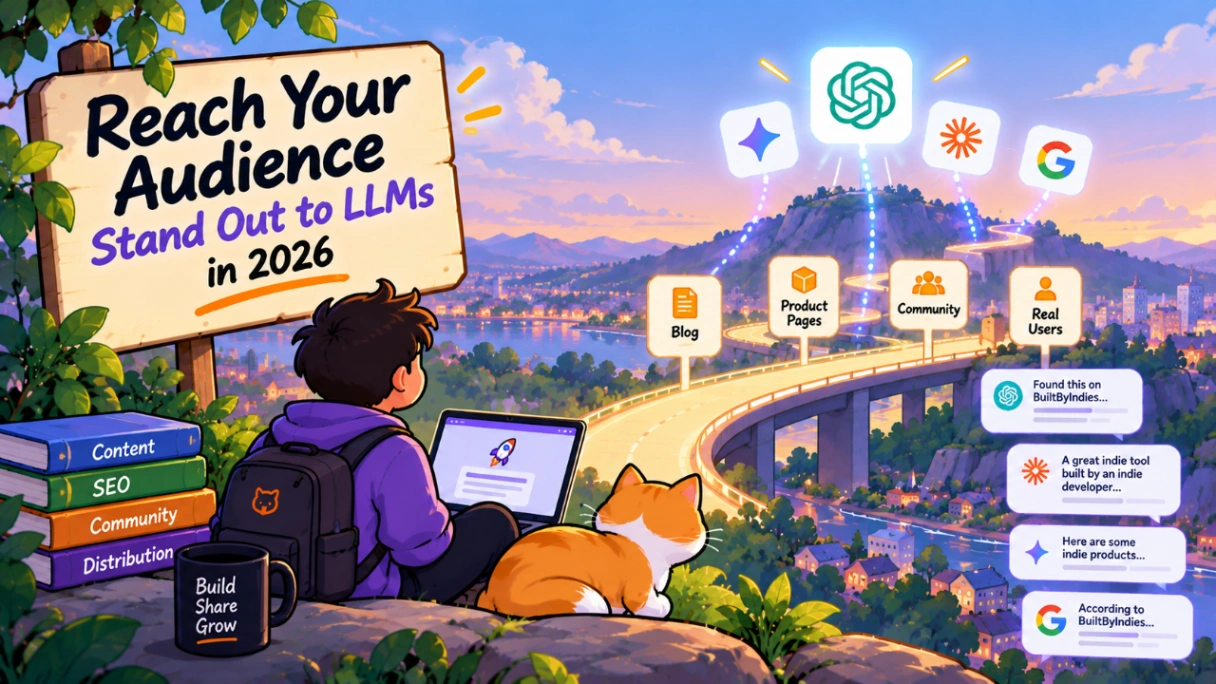
Start with the platform that rewards consistency over a one-day spike. A weekly launch cycle paired with a public buildlog gives you repeated shots at visibility instead of one shot that either hits or vanishes. That's the model worth building around if you plan to keep shipping past your first launch.
If you're ready to put this into practice, claim your username on Builtbyindies, start your buildlog, and enter this week's launch cycle. Your next update might be the one that finally sticks.