



You’re building a tool to automate pull request summaries. You need an AI that can ingest a giant diff and spit out a clean, structured summary. The official Claude Code API is solid, but it’s throttled. It’s also sanitized, wrapping responses in conversational fluff you have to parse out. It feels like you’re trying to hotwire a car while wearing oven mitts. Then you see the headline on Hacker News: "Backdoor in Claude Code for VS Code extension on the Cursor Marketplace".
Your stomach drops. Is your key exposed? Is this a supply-chain attack? The thread is a firestorm of security what-ifs and ethical debates.
Ignore them. That’s not the real story for you. This isn't a security breach. It’s an opportunity. The "backdoor" is an undocumented API endpoint. And for a solo founder shipping this week, that’s not a vulnerability—it’s leverage.
What Actually Shipped: A Shortcut, Not a Skeleton Key
Let's be clear. This isn't a "backdoor" in the sense of a malicious actor planting `ssh` keys in a library. Nobody is getting root on your machine. The panic on Hacker News comes from a misunderstanding of terms.
What the community found is an internal, undocumented API endpoint that the Cursor editor uses to communicate with Anthropic's models. Think of it as a private driveway instead of the public highway. The official, documented API is the highway: it has speed limits, tolls (rate limits), and guardrails (content filters, structured I/O). It’s built for public use and guaranteed to be stable.
The internal endpoint is the team's private driveway. It's unpaved, has no signs, and the owner might tear it up tomorrow to build a swimming pool. It’s faster and more direct because it’s built on a foundation of trust between first-party clients (like Cursor) and the backend. It bypasses the public-facing niceties because the client is assumed to know what it’s doing.
This "backdoor" is just a `fetch` call to a URL that isn’t in the official docs. That’s it. It’s an engineering shortcut, not a security catastrophe.
Why a Solo Founder Should Care: Asymmetric Leverage
You can’t out-spend a venture-backed team. You can’t out-hire them. You win by being faster, smarter, and using every bit of leverage you can find. Undocumented APIs are pure leverage.
While your competitors are wrestling with the public API's limitations, you can use the internal endpoint to ship a feature that feels like magic. Why is it better?
Speed: Internal endpoints often have less overhead. Fewer validation layers, no queueing for public traffic. The response comes back in 300ms instead of 1.2s. For an interactive tool, that’s the difference between "flow state" and "frustration."
Power: The official API might enforce a specific prompt structure. The internal one might let you send raw, unfiltered instructions, or use special tokens to control the output format directly. This means you get raw JSON back, not a Markdown block you have to parse with a brittle regex.
Insight: By observing how the first-party app uses its own API, you learn how the model *really* works. You see the undocumented parameters, the clever prompt engineering tricks they use internally. This is free R&D.
The current AI landscape is a frantic race for differentiation. Everyone has access to the same few foundational models. The ongoing debate over Claude vs GPT vs Gemini for Shipping Code in 2026 shows that the models themselves are becoming commodities. Your advantage comes not from the model you pick, but from how you wield it. Using an internal API is like getting a race-tuned engine while everyone else is driving the stock model off the lot.
How to Find and Use It in a Day
This isn't theoretical. You can do this tonight. The goal is to observe the network traffic of an official client (like the Cursor VS Code extension) and replicate its API calls.
1. Get a Man-in-the-Middle Proxy.
Download Proxyman (macOS) or Mitmproxy (cross-platform). This software sits between your app and the internet, letting you inspect all outgoing HTTPS requests.
2. Spy on the Official Client.
Enable SSL proxying for the VS Code or Cursor process. Perform the action you want to replicate—for example, ask the AI to refactor a piece of code. You’ll see a flood of network requests. Look for the one that matters, probably a POST request to a domain like `api.anthropic.com` or, in this case, a more obscure internal URL.
3. Isolate the Request.
You'll find a cURL command. It might look something like this (this is a hypothetical example):
curl 'https://internal-api.anthropic.sh/v3.1/unstable/code/complete' \
  -H 'Authorization: Bearer session-xxxxxxxx' \
  -H 'Content-Type: application/json' \
  --data-raw '{
    "model": "claude-code-v3-turbo",
    "prompt": "\n<user>\nRefactor this code to be more idiomatic Python:\n<code>\n...\n</code>\n</user>\n<assistant>\n",
    "stop_sequences": ["\n</user>"],
    "temperature": 0.1,
    "stream": true,
    "__internal_params__": {
      "bypass_filter": "level_3"
    }
  }'
The gold is in the details. Notice the `__internal_params__`. That’s your leverage. That’s the stuff not in the public docs. Maybe `bypass_filter` lets you get more direct, less "helpful" output that's perfect for a script. Maybe the `v3.1/unstable` path points to a model that’s a week ahead of the public one.
4. Replicate It.
Now, translate that cURL into your language of choice. You grab the auth token, headers, and body, and make the same request from your own backend. You now have a direct, high-speed line to the model, exactly as the first-party client does.
The Catch: This Will Break Violently
Let’s have a moment of absolute clarity. If you build your product on this, it is not a question of *if* it will break, but *when*. And it will break without warning, at 3 AM on a Saturday.
Anthropic has zero obligation to keep this endpoint stable. They can:
Change the URL.
Require a new authentication header.
Change the request or response format.
Deprecate the model it points to.
Rate limit or block your IP entirely.
You have no support channel. You cannot file a ticket. You are a ghost in their machine, and they can exorcise you at any time. Building on an undocumented API is a conscious decision to trade stability for speed. Many indie hackers face this dilemma, which is why threads like Ask HN: Shipping AI Code You Don't Understand (2026) are so common. You are accepting a new class of risk.
This is not a foundation for your core, paid product. This is scaffolding for a weekend project, an internal tool, or a risky alpha feature you explicitly label "experimental."
So, Is It Worth Switching To?
Yes, for the right job. You just have to be ruthlessly pragmatic about what that job is. This is a framework for making the call.
This table compares the trade-offs between the two approaches:
Aspect | Official API | "Backdoor" API |
|---|---|---|
Stability | High (versioned, documented) | None (will break) |
Support | Yes (docs, support tickets) | None |
Speed | Throttled, consistent | Potentially raw, faster |
Customization | Limited to public parameters | High (internal params, direct control) |
Longevity | Guaranteed by SLA | Zero guarantee |
Best for | Production SaaS, core features | Prototypes, internal tools, experiments |
Use the "backdoor" for:
A free Chrome Extension you’re launching on Product Hunt to see if an idea has legs.
An internal script that automates your own dev workflow, like `git-lrc`, a tool that uses AI to write your commit messages. If it breaks, only your workflow is affected.
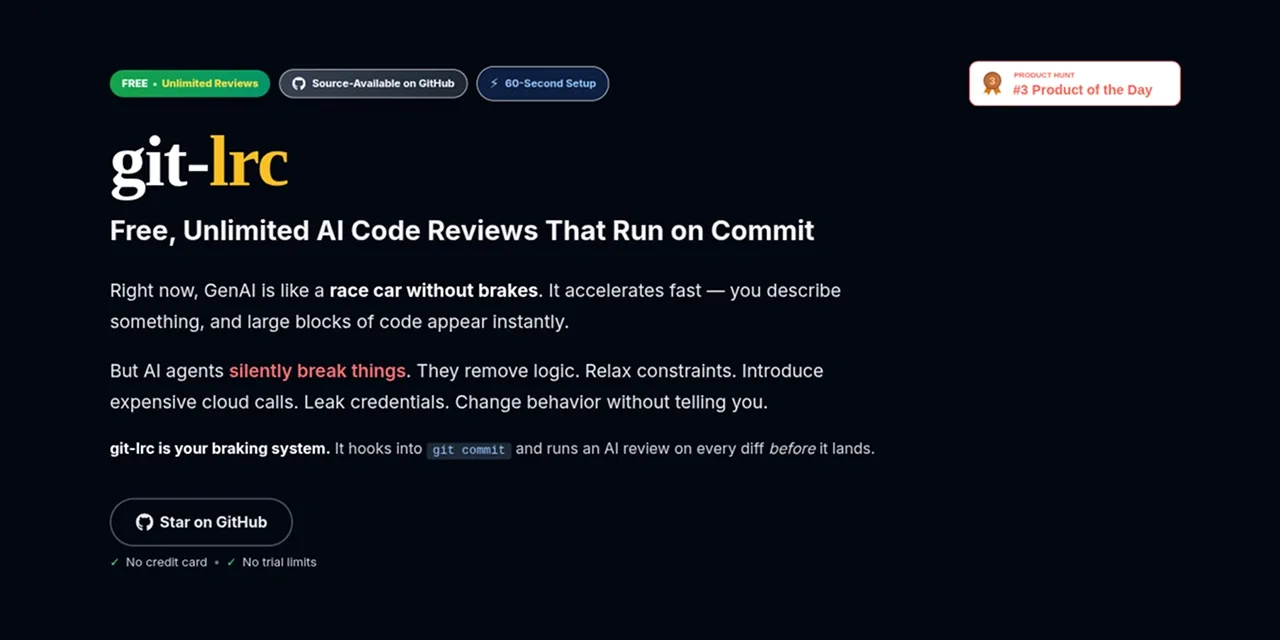
git-lrc generating a commit message based on staged changes.
A tool like `git-lrc` could have been prototyped in a weekend using this method to get raw diff-to-summary generation without API fluff. Once validated, it could be moved to a more stable, official endpoint.
Do NOT use the "backdoor" for:
The core payment-gated feature of your B2B SaaS.
Anything that has paying customers who will churn if it goes down.
Any feature where reliability is more important than performance.
The Real Lesson Is About Taste
This entire episode is a litmus test for engineering taste. The wrong takeaway is "never use undocumented APIs." The equally wrong takeaway is "always use undocumented APIs to go faster."
The right takeaway is that you, the founder, must make a conscious, eyes-open decision about risk and reward. You must know which parts of your system need to be built on bedrock and which can be built on sand. The best founders are masters of this trade-off.
They know that a polished, by-the-book process like the one described in How Claude Code Team Does Code Review in 2026 is essential for a core product, but overkill for a prototype. They know when a cheap, fast model like Claude Haiku 5.5 is the right tool, and when they need the raw power of an unreleased internal model.
The Hacker News crowd can debate the ethics and security implications from the cheap seats. You’re in the arena. For you, this isn’t a debate. It’s a tool. A risky, temporary, powerful tool. Use it wisely to ship something this week.