You got the email on a Tuesday morning.
The subject line was bland: “Important Update Regarding Your remove.bg Account.”
Your stomach dropped.
Your app, the one you code on after work, after your kids are asleep, or whenever you can find a few quiet hours, relies on it.
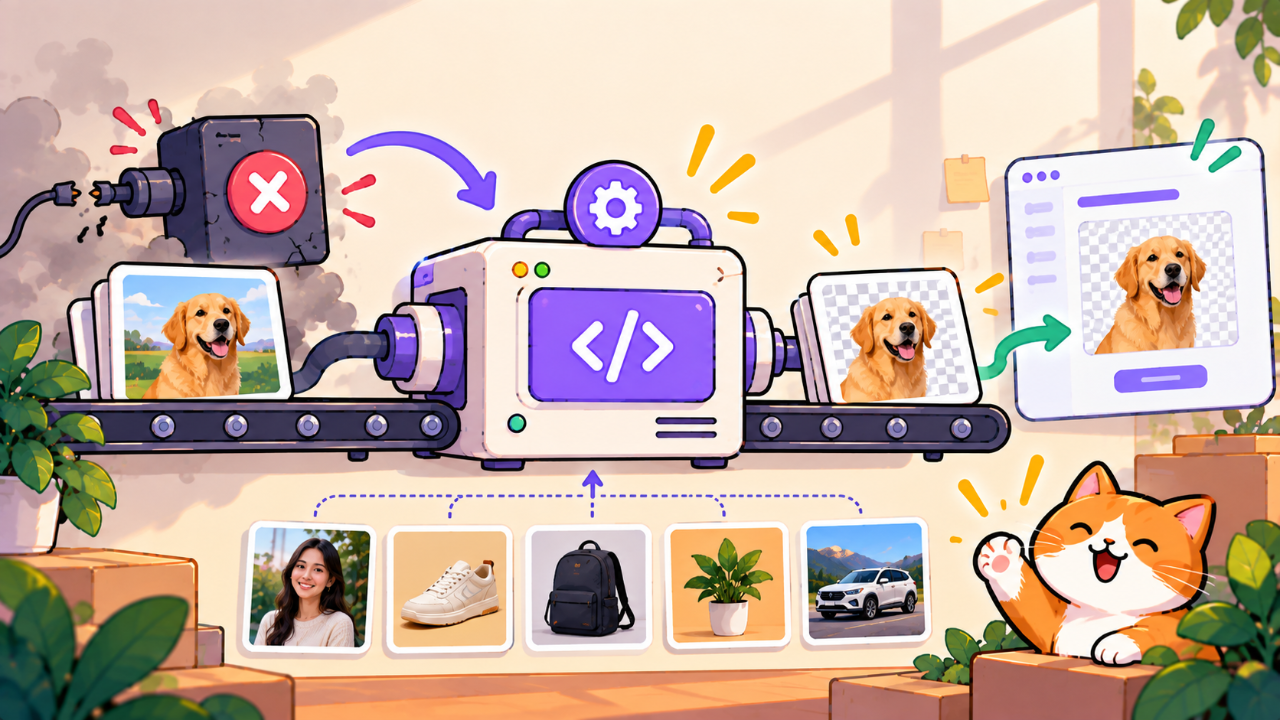
Every user-uploaded profile picture. Every product image. Every marketplace listing. Every time someone uploads an image, one simple API call does the magic.
The background disappears.
And now you have to find a replacement.
Your first instinct is panic.
Your second is to search for “remove.bg alternatives.”
You'll find a dozen listicles, each with the same generic comparison of ten nearly identical services.
This isn't one of those posts.
This is a migration plan.
And the good news is that replacing your background removal API doesn't have to mean rewriting your application.
You can move to nobg.space's Background Removal API, make a relatively small integration change, test it properly, and get back to building your product.
The Real Problem Isn't the API
Let's be honest.
The difficult part of an API shutdown isn't actually replacing the endpoint.
It's realizing how deeply a tiny dependency can become embedded in your product.
You probably don't think about background removal anymore.
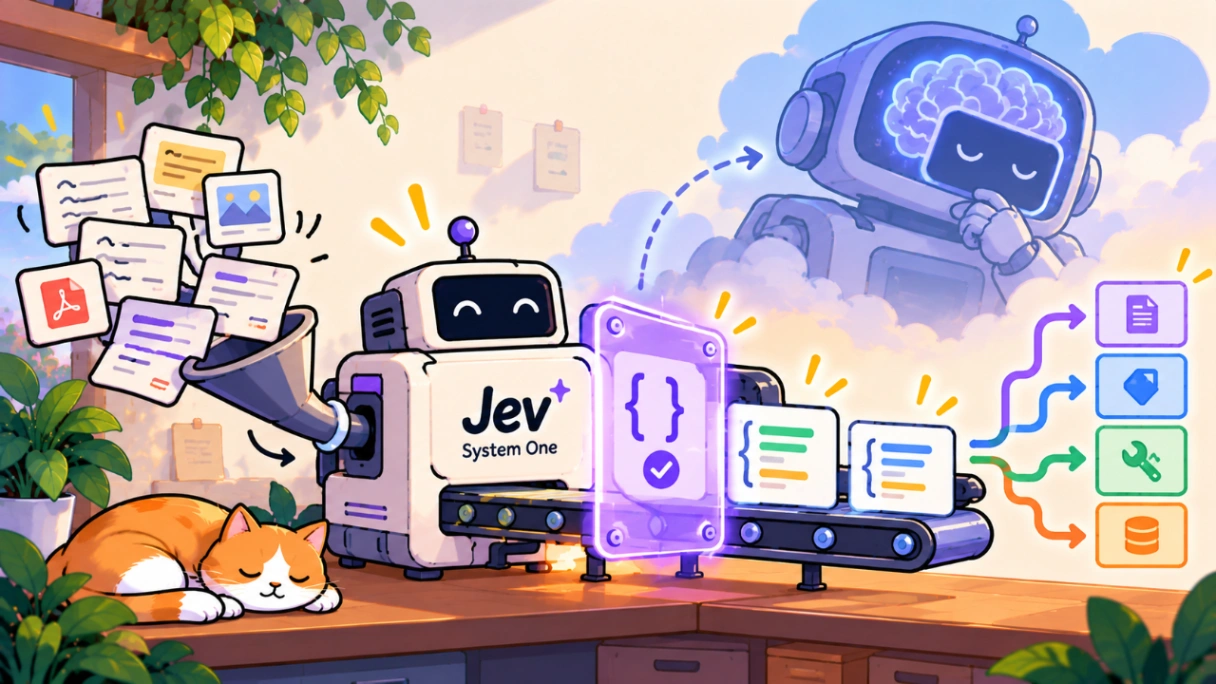
It's just another function:
upload image
      ↓
background removal API
      ↓
transparent image
      ↓
your application
It works.
So you leave it alone.
Months pass.
Your product grows.
Your users grow.
And eventually, that tiny API becomes infrastructure.
That's when changing providers suddenly feels terrifying.
But it doesn't need to be.
The important thing to remember is that background removal is a well-defined operation.
Your application doesn't really care which company processes the pixels.
It cares about three things:
You can send an image.
The image gets processed.
You receive the resulting image.
That's the abstraction you should migrate.
Not your entire application.
The Weekend Migration: Move to nobg.space
If you need a replacement quickly, nobg.space's Background Removal API is designed around exactly this use case.
The goal isn't to force you to rebuild your image-processing pipeline.
It's to give you another simple API endpoint for removing image backgrounds.
Your existing application probably already has something conceptually similar to this:
User uploads image
        ↓
Your backend
        ↓
Background removal API
        ↓
Transparent PNG
        ↓
User
With nobg.space, you keep that architecture.
The provider changes.
Your product doesn't.
Step 1: Get Your API Key
Create an account with nobg.space and get your API credentials.
Keep the API key on your server.
Don't put your secret API key directly inside a frontend application where users can extract it.
Your architecture should look something like:
Frontend
   ↓
Your Backend
   ↓
nobg.space API
   ↓
Processed Image
Step 2: Replace the API Request
Your old implementation probably has a function somewhere that looks roughly like this:
async function removeBackground(image) {
    // Send image to your background removal provider
    // Receive transparent image
    // Return result
}
That's the important part.
You don't need to redesign your application.
You don't need to rewrite your upload system.
You don't need to change how users interact with your product.
You mainly need to replace the implementation behind that function.
For example, a Node.js implementation can follow this general pattern:
import fs from "fs";
import FormData from "form-data";
import fetch from "node-fetch";

const formData = new FormData();

formData.append(
    "image",
    fs.createReadStream("./image.jpg")
);

const response = await fetch(
    "YOUR_NOBG_API_ENDPOINT",
    {
        method: "POST",
        headers: {
            "Authorization": "Bearer YOUR_NOBG_API_KEY",
            ...formData.getHeaders()
        },
        body: formData
    }
);

if (!response.ok) {
    throw new Error(
        `Background removal failed: ${response.status}`
    );
}

const buffer = await response.arrayBuffer();

fs.writeFileSync(
    "./result.png",
    Buffer.from(buffer)
);

console.log("Background removed successfully.");
The exact endpoint, authentication header, and request field should come from the current nobg.space API documentation.
The important thing is the architecture.
Image in. Process it. Image out.
Step 3: Test Before You Switch Everything
Don't immediately replace your production integration.
Take a representative collection of images:
Product photos
Human portraits
Images with hair
Images with complicated backgrounds
Transparent or low-contrast objects
Images with multiple objects
Small images
Large images
Run them through the new API.
Compare the results.
Then test the failure cases.
What happens when the image is too large?
What happens when the request times out?
What happens when the API returns an error?
What happens when your server receives an unexpected response?
This is the boring part.
It's also the part that prevents your users from discovering the bugs for you.
Don't Just Change the Endpoint
There's another lesson hidden in an API migration.
Don't scatter provider-specific code throughout your application.
Instead, create one internal function.
For example:
async function removeBackground(image) {
    // All provider-specific logic lives here.
}
Then the rest of your application simply calls:
const result = await removeBackground(image);
Your upload system doesn't need to know which API you're using.
Your database doesn't need to know.
Your frontend doesn't need to know.
Your users definitely don't need to know.
This makes future migrations dramatically easier.
If you ever need to change providers again, you change one integration instead of hunting through your entire codebase.
What Not to Do
An API migration is exactly the kind of situation where developers start overengineering.
Don't.
Trap #1: Self-Hosting a Background Removal Model
You'll eventually discover open-source models and think:
"Why am I paying an API provider? I'll just host the model myself."
Technically, you can.
But technical possibility and business practicality are two different things.
Self-hosting means dealing with:
GPU infrastructure
Model downloads
CUDA or accelerator compatibility
Python dependencies
Memory requirements
Scaling
Cold starts
Monitoring
Queue management
Image processing limits
Infrastructure costs
Suddenly, your simple image-processing feature has become an infrastructure project.
If machine learning infrastructure is not the actual product you're building, this can become a massive distraction.
There's nothing wrong with self-hosting when it makes economic or technical sense.
But don't turn a two-hour API migration into a two-week infrastructure project just because it feels more "independent."
Trap #2: Building a Giant Multi-Provider Abstraction
The second temptation is the opposite.
You think:
"I'm never getting trapped again."
So you build:
Provider A
     ↓
Provider B
     ↓
Provider C
     ↓
Provider D
     ↓
Automatic failover
     ↓
Health monitoring
     ↓
Usage balancing
Suddenly you've spent three days building infrastructure for a problem you don't currently have.
You don't need a NASA-grade failover system for a background removal endpoint.
Start simple.
Create one internal function.
Keep the provider-specific code isolated.
If your product grows to millions of image-processing requests, revisit the architecture.
Until then, ship.
Your API Is a Dependency. Treat It Like One.
There is one thing you should absolutely do after migrating.
Document the dependency.
Put something like this in your codebase:
/*
 * Background removal provider:
 * nobg.space
 *
 * Keep provider-specific logic inside this module.
 * If the provider changes in the future,
 * update this integration instead of the rest
 * of the application.
 */
Also record:
API documentation
Authentication method
Expected response format
Maximum image size
Timeout expectations
Error codes
Rate limits
Pricing
Current API version
This takes minutes.
Future-you will appreciate it.
The Bigger Lesson: Don't Build Your Product Around Someone Else's API
There's a deeper lesson here.
Your product isn't the background removal API.
Your product is whatever you're building with background removal.
Maybe it's an e-commerce platform.
Maybe it's a profile-picture generator.
Maybe it's a marketplace.
Maybe it's a social application.
Maybe it's an image editor.
Maybe it's a tool for content creators.
The background removal API is infrastructure.
Don't let infrastructure become your product architecture.
Build your application so that the provider is replaceable.
Then an API shutdown becomes an engineering task instead of an existential crisis.
What You Can Build on Top of Background Removal
There's another opportunity here too.
Background removal doesn't have to be the end of your image pipeline.
It's often the first step.
Consider an e-commerce workflow:
Original product photo
        ↓
Remove background
        ↓
Clean product image
        ↓
Resize
        ↓
Add branding
        ↓
Generate listing image
        ↓
Publish
Or a profile-picture workflow:
User photo
    ↓
Remove background
    ↓
Create clean portrait
    ↓
Add custom background
    ↓
Generate multiple variations
The API is just one component.
The real product opportunity is everything you can build around it.
That's how an ordinary image-processing API becomes an actual product feature.
Why nobg.space?
If your application already depends on background removal, you don't necessarily need a complicated image-AI platform with dozens of unrelated features.
Sometimes you just need the thing your application actually needs:
Remove the background. Get the image back. Keep building.
That's the idea behind the nobg.space Background Removal API.
You can integrate background removal into your own application instead of sending users to a separate website.
That means your users stay inside your product.
Your workflow stays intact.
And your developers can work with background removal as another backend capability.
The Migration Doesn't Have to Be Scary
An API provider changing its service can feel like a disaster when your product depends on it.
But step back.
Your users don't care which background removal provider you use.
They care that their image works.
Your application doesn't need to know the history of the API provider.
It needs a reliable way to process an image.
So don't panic.
Don't rewrite your entire application.
Don't spend two weeks building infrastructure.
Identify the integration.
Isolate the provider-specific code.
Test the replacement.
Deploy it.
Then move on.
And if you're looking for a background removal API to replace remove.bg, nobg.space is one option to evaluate for your next integration.
The goal isn't to find another API you'll be afraid to replace five years from now.
The goal is to build your product so that replacing an API is just another pull request.
Because APIs will change.
Companies will change.
Pricing will change.
Products will shut down.
Your code shouldn't have to fall apart with them.