
Scalattice
OpenAI-Compatible inference API for open models
Screenshots
 Golang
 Rust
RustWhat is Scalattice?
Scalattice is a distributed AI inference network and API that connects software developers with independent GPU providers.
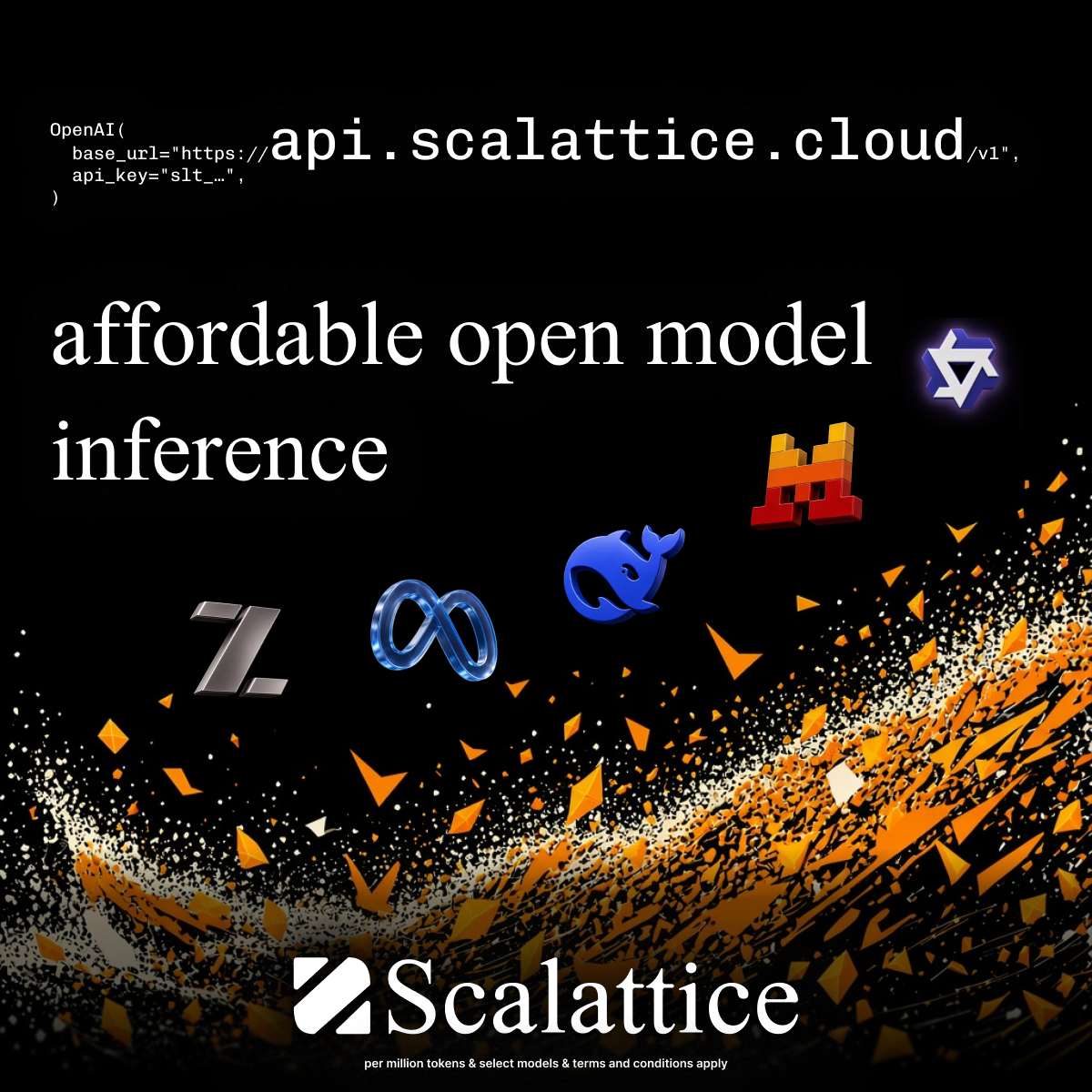
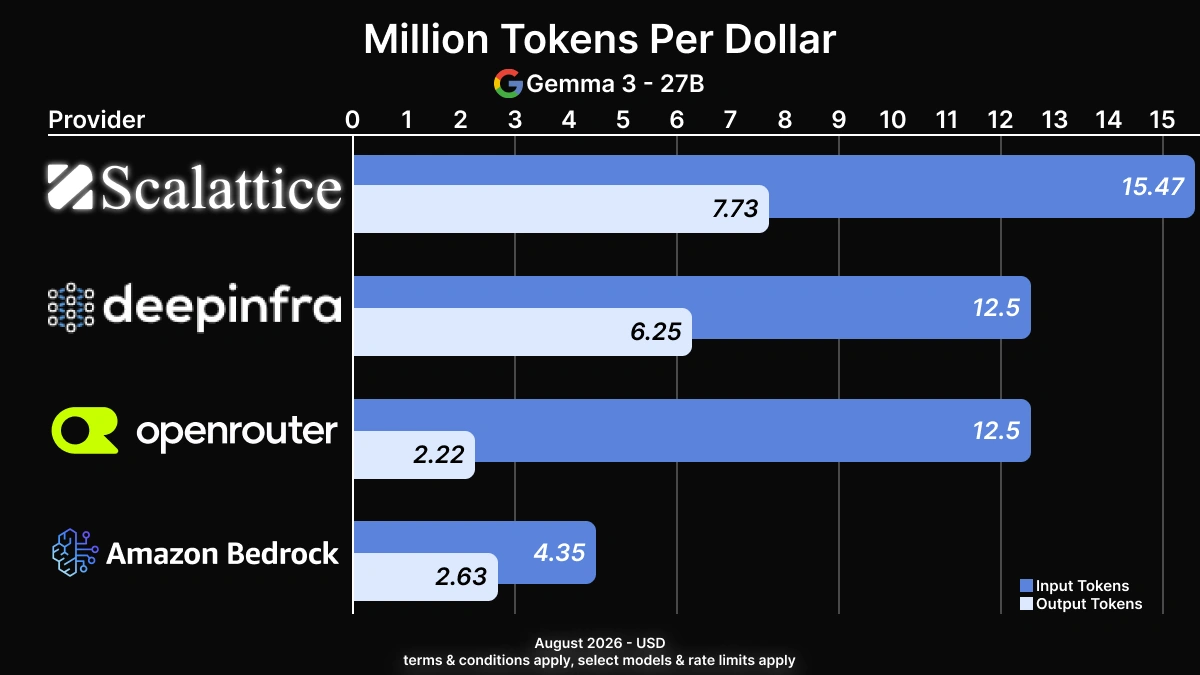
We enable developers to run inference jobs on popular open-source large language models through an OpenAI-compatible API without paying the premium prices charged by traditional centralized cloud providers.
By aggregating compute from gaming rigs, homelabs, and datacenters, the platform lowers operational costs for machine learning inference.
The system addresses the rising costs and limited availability of specialized AI hardware.
Scalattice manages routing, request validation, security tiers, and regional compliance while distributing inference-only tasks to hosts.
Developers interact with a standard REST interface, while hardware owners monetize their idle computing power by executing jobs locally via a dedicated background agent.
Who is it for?
Scalattice is designed for technical builders needing cost-effective model hosting as well as hardware owners looking to monetize compute:
- AI software developers who want drop-in OpenAI-compatible endpoints to cut per-token inference costs.
- GPU owners, homelab enthusiasts, and small datacenter operators with spare capacity who want to earn money hosting open models.
- Engineering teams with strict data residency rules that need geographic routing across specific jurisdictions like the EU or US.
- Startups prototyping generative AI applications that need flexible pay-as-you-go capacity without fixed server commitments.
Key features
- OpenAI-compatible endpoints: Integrates directly with existing codebases by simply replacing the base URL and API authentication token in standard SDKs.
- Curated open-weight models: Offers immediate access to popular open models including Llama, Qwen, DeepSeek, Gemma, Mistral, and gpt-oss.
- Geographic routing controls: Allows developers to attach headers specifying request locations such as EU pools, US pools, or APAC edge nodes to satisfy regional policies.
- Automated capacity fallback: Automatically routes requests to backup infrastructure if distributed provider machines drop offline or experience peak demand.
- Open-source provider agent: Lightweight host client that lets machine owners safely connect consumer or enterprise graphics cards to the network.
- Security and vetting tiers: Configurable request filters that ensure inference runs only on verified nodes meeting specific performance and compliance standards.
- Granular token tracking: Scalattice Cloud dashboard provides real-time visibility into input and output token consumption as well as provider earnings.
Use cases
A software team building a customer service chatbot can switch their existing OpenAI integration to Scalattice to run open-weight models like Llama or Qwen at a lower per-token rate, significantly reducing monthly operational bills.
Hardware enthusiasts with high-end desktop gaming setups or homelab racks can run the provider agent on nights and weekends, monetizing idle electricity and hardware to earn revenue whenever they are not actively using their machines.
A European enterprise needing to adhere to strict regional data rules can enforce EU-only routing headers, ensuring all inference processing remains isolated within compliant European geographic borders.
Pricing
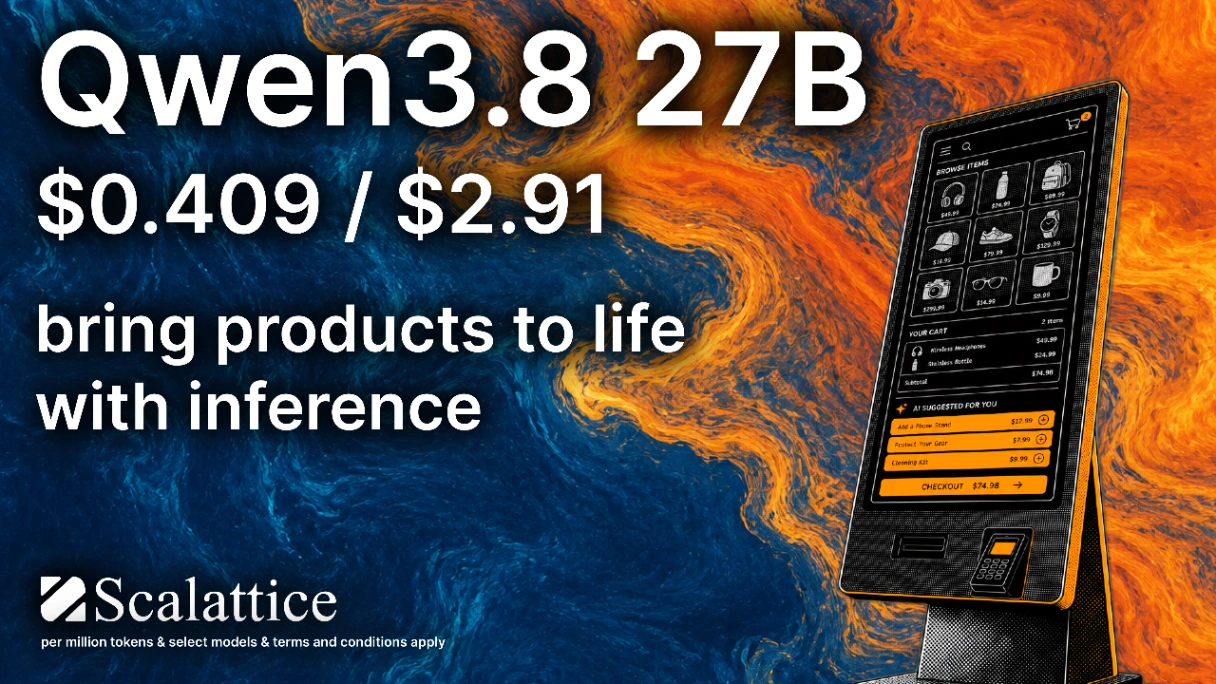
Scalattice operates on a Freemium, pay-as-you-go usage model. Developers pay published rates per million input and output tokens using prepaid account credits, with rates varying by model architecture and real-time demand.
Hardware providers pay a $0 platform connection fee, earn the majority share of developer token spend on completed jobs, and can request on-demand payouts once reaching a $5 minimum balance.
Custom enterprise agreements are available for dedicated GPU pools, specific jurisdictions, and annual PO invoicing.
Competition
Scalattice functions as a distributed alternative to centralized AI inference platforms like Together AI, Groq, and OpenRouter.
Unlike traditional cloud providers that host models in centralized server farms, Scalattice uses a peer-to-peer network model that lets distributed third parties provide GPU capacity, yielding competitive token pricing and flexible geographic routing.
FAQ
How do I switch an existing OpenAI project to Scalattice?
You only need to change the API key and set the base URL to api.scalattice.cloud/v1 within the official OpenAI client library, then pass any supported open model name.
What kind of hardware is supported for providers?
The network accepts both consumer graphics cards and enterprise datacenter hardware. Gaming setups, homelabs, and server racks can all run the host software.
Related products
View all
AntForms
Unlimited free submissions + free analytics + integrations +


AthleteMatrix
Your personal coach based on data from your everyday apps


More categories
All categories




Launched in Week 8, 2027
See the week
Whinta
Omnichannel messaging, AI bots, and WhatsApp Business API.

Black & White Baby Cards
Printable high-contrast baby cards and an AI card creator

Instinct AI
Your AI director for video, images, voice and music.

EUDR Tools
Free EUDR scope, country-risk and supplier plot checks