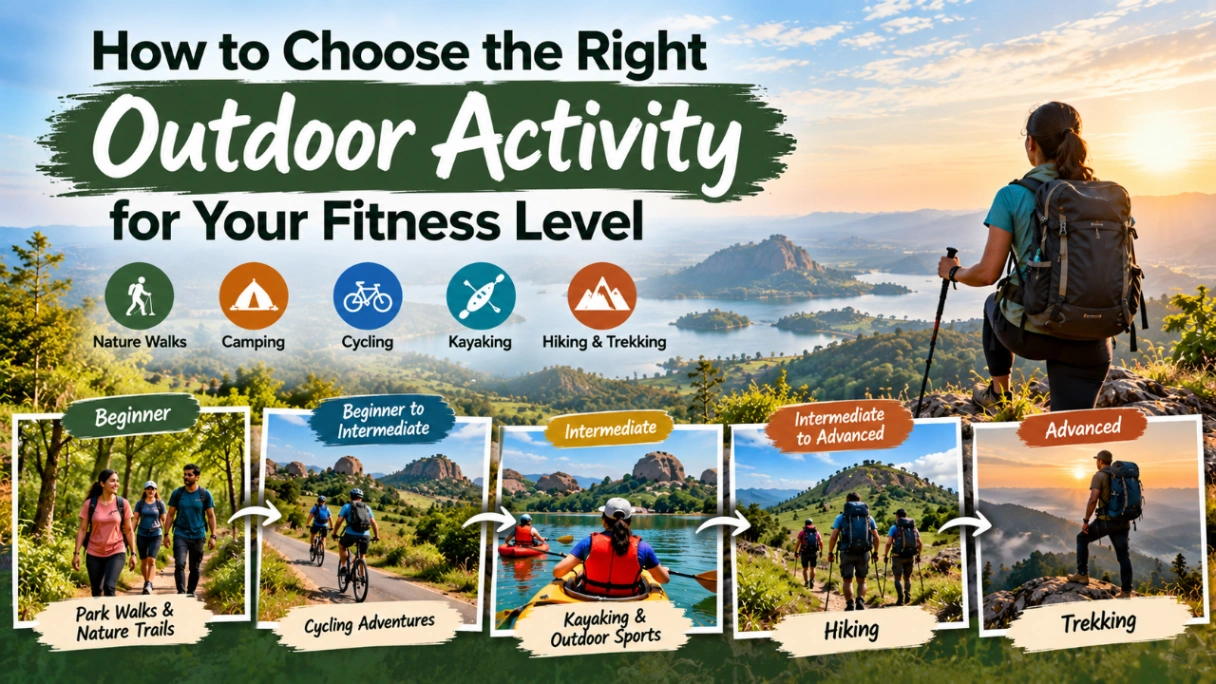
Outdoor adventures are a great way to stay active, explore nature, and take a break from everyday routines. From relaxed nature walks to challenging hill treks, there are outdoor activities for almost every fitness level.
However, choosing an activity that matches your current ability is important. Starting with a route that is too demanding can lead to exhaustion, discomfort, or injury, while choosing an activity that suits your experience can help you build confidence and enjoy the outdoors.
If you're looking for outdoor activities near Bengaluru, Karnataka, there are different ways to get started, whether you prefer a gentle walk in a park, a cycling outing, or a more challenging adventure.
In this guide, we'll explain how to assess your fitness level, choose suitable outdoor activities, and prepare for a safe and enjoyable experience.
Why Your Fitness Level Matters When Choosing Outdoor Activities
Not every outdoor activity requires the same level of strength, stamina, balance, or coordination. A short walk on a level path places different demands on your body than climbing a steep hill or cycling over uneven terrain.
Understanding your current ability can help you:
Choose activities that feel manageable and enjoyable.
Reduce the risk of overexertion and avoidable injuries.
Build endurance gradually.
Select appropriate equipment and clothing.
Plan realistic routes and activity durations.
Enjoy outdoor experiences with friends who have different abilities.
You don't need to be extremely fit to begin exploring the outdoors. The important thing is to start at a comfortable level and progress at your own pace.
Step 1: Understand Your Current Fitness Level
Before choosing an outdoor adventure, think about your everyday activity levels and how comfortably you move.
These categories are general guidelines, not medical assessments.
Beginner: Building an Active Routine
You may be a beginner if you spend much of the day sitting, do little regular exercise, or are just starting to become more active.
Activities to consider:
Short walks in parks.
Easy nature walks on level paths.
Gentle outdoor yoga and stretching.
Relaxed cycling on suitable, traffic-free routes.
Short photography walks.
How to start: Begin with a duration that feels comfortable, perhaps 10–20 minutes, and gradually increase it as your stamina improves. You do not need to start with a long hike.
Intermediate: Comfortable With Regular Activity
You may fit this category if you walk regularly, participate in exercise, or can comfortably manage moderate physical activity.
Activities to consider:
Longer nature walks.
Beginner-friendly hikes with gradual elevation.
Moderate cycling routes.
Guided kayaking sessions where available.
Longer outdoor photography trips.
How to start: Increase distance or duration gradually. Research the terrain and elevation before choosing a hike, and leave enough time for breaks.
Advanced: Experienced and Well-Prepared
You may have a higher fitness level if you regularly participate in endurance activities, longer hikes, cycling, or other demanding sports.
Activities to consider:
Longer hill hikes.
Challenging cycling routes.
Multi-hour outdoor adventures.
Longer treks with appropriate preparation.
Technical activities with qualified instruction.
How to start: Fitness alone is not enough for technical adventures. Make sure you have the relevant skills, equipment, permissions, and knowledge of the route.
Step 2: Match Outdoor Activities to Your Fitness Level
The table below offers a simple starting point for choosing an activity.
Fitness level | Activities to consider | Suggested starting point |
|---|---|---|
Beginner | Park walks, gentle yoga, easy cycling | Short sessions on level or traffic-free routes |
Beginner to intermediate | Nature walks, photography outings, longer park walks | Gradually increase time spent outdoors |
Intermediate | Moderate hikes, cycling, supervised paddling | Choose routes with manageable elevation and distance |
Intermediate to advanced | Longer hikes, demanding cycling routes | Research terrain, elevation, weather, and access |
Advanced and experienced | Challenging treks and technical outdoor sports | Use suitable equipment, training, and professional guidance where needed |
Actual difficulty varies by route, weather, temperature, altitude, and individual ability. Always check the specific activity rather than relying on its label alone.
Step 3: Choose Activities Based on Your Interests
Fitness is only one part of the decision. You're more likely to enjoy an outdoor activity if it matches your interests.
If You Prefer Relaxed Experiences
Consider:
Picnics in permitted public spaces.
Nature photography.
Birdwatching.
Gentle walks.
Outdoor stretching.
These options can help you spend more time outdoors without committing to a strenuous workout.
If You Enjoy Cardio and Endurance
Consider:
Walking at a brisk but comfortable pace.
Cycling on suitable routes.
Longer hikes.
Trail running after building the necessary fitness and skills.
Choose an activity that allows you to manage your effort without pushing yourself beyond your ability.
If You Enjoy Challenges and New Skills
Consider:
Guided rock climbing.
Organized kayaking or paddleboarding.
Orienteering.
Longer treks.
Supervised adventure activities.
These experiences may require specialist equipment, instruction, permits, or specific safety arrangements.
If You Prefer Group Activities
Consider:
Group walks.
Picnics and outdoor games.
Recreational cycling.
Beginner-friendly guided adventures.
Photography challenges.
When planning with friends, choose an activity that accommodates the group's least experienced participant rather than pressuring everyone to keep up.
Step 4: Consider Outdoor Activities Near Bengaluru
Bengaluru and its surrounding areas in Karnataka offer a range of outdoor settings. The right option depends on your experience, travel time, current access rules, and weather conditions.
1. Parks and Green Spaces in Bengaluru
Public parks and gardens can be useful places to begin with walking, gentle exercise, or photography.
Suitable for: Beginners and people returning to regular physical activity.
Preparation: Check park rules, opening hours, and permitted activities. Carry drinking water and avoid strenuous exercise during extreme heat.
2. Nandi Hills
Nandi Hills is known for its elevated landscape and scenic views. It may suit a short outdoor outing or a planned walk in permitted areas, depending on current access arrangements.
Suitable for: People looking for scenic outdoor experiences, with the actual walking route chosen according to ability.
Preparation: Check current opening times and walking restrictions. Do not assume every path or steep section is open or safe.
3. Ramanagara
The Ramanagara region is known for rocky hills and distinctive landscapes around Karnataka. The difficulty of outdoor activities varies considerably by location.
Suitable for: Visitors interested in nature, scenic exploration, and permitted outdoor activities.
Preparation: Confirm access rules before travelling. Rock climbing should only be undertaken where authorized and with appropriate training, equipment, and supervision.
4. Savandurga
Savandurga is known for its rocky hill terrain and can involve physically demanding routes.
Suitable for: More prepared hikers, where access is currently permitted.
Preparation: Check official guidance and weather conditions. Rocky surfaces can become dangerous after rainfall, so avoid attempting a route when conditions are unsafe.
5. Skandagiri
Skandagiri is known for hill trekking experiences near Bengaluru, subject to applicable access and booking requirements.
Suitable for: People who have prepared for the specific route and are comfortable with its physical demands.
Preparation: Confirm official booking arrangements, route conditions, and required permissions before travelling.
These locations are examples, not a guarantee that every activity is currently permitted at each site.
Step 5: Assess the Route Before You Go
Two outdoor activities with the same name can have very different levels of difficulty. Before leaving, research the route and consider the following factors.
Distance and Duration
A short, level walk is different from a long route that takes several hours. Choose a distance that you can manage comfortably, including the return journey.
Elevation Gain
Steep climbs can require more effort than walking on level ground. If you're new to hiking, look for a route with manageable elevation and clear information about its difficulty.
Terrain
Uneven rocks, loose gravel, mud, and slippery surfaces can make an activity more challenging. Appropriate footwear and route experience become especially important.
Weather
Heat, heavy rain, strong winds, and poor visibility can change the difficulty of an outdoor activity. Check the forecast and local advisories before setting out.
Access and Safety Requirements
Some routes require advance booking, permits, guides, or specific safety arrangements. Check current official information before travelling.
Step 6: Build Your Fitness Gradually
If you have a specific outdoor adventure in mind, you can prepare for it by developing the relevant skills and endurance over time.
Start With Regular Walking
Walking is a practical way to build an active routine. Begin with a comfortable duration and gradually increase your time or distance.
Add Gentle Hills
Once level walks feel manageable, consider gentle inclines in safe, accessible areas. This can help prepare you for routes with elevation gain.
Practise With Suitable Equipment
Wear the footwear and carry the daypack you plan to use. For cycling or other sports, make sure your equipment fits properly and is in good working condition.
Include Rest and Recovery
Allow yourself time to recover between demanding activities. If you experience unusual pain, dizziness, chest discomfort, or severe breathlessness, stop and seek appropriate medical help.
Learn Activity-Specific Skills
Fitness cannot replace technical knowledge. Climbing, paddling, and challenging treks may require instruction, safety training, and qualified supervision.
Essential Items for Outdoor Activities
Your packing list should match the activity, duration, and weather, but these items are useful for many outings:
Drinking water and appropriate snacks.
Comfortable clothing suitable for the conditions.
Footwear appropriate to the terrain.
Sunscreen, a hat, and sunglasses.
A charged mobile phone.
A basic first-aid kit.
Offline maps or route information where needed.
Rain protection when the forecast calls for it.
Activity-specific safety equipment.
For longer or remote outings, plan additional supplies and emergency arrangements rather than assuming facilities will be available.
Common Mistakes to Avoid
Choosing an Activity Because It Looks Easy Online
Photos and short videos rarely show the full route, elevation, weather, or safety requirements. Research the actual conditions before making a decision.
Increasing Difficulty Too Quickly
Moving straight from short walks to a steep or lengthy trek can leave you unprepared. Build your ability gradually.
Ignoring Weather Conditions
A familiar route can become unsafe during heavy rain, extreme heat, or poor visibility. Postpone the activity if conditions are unsuitable.
Comparing Your Fitness With Others
Your ideal pace may differ from your friends'. Choose an experience that suits your current ability and progress on your own terms.
Forgetting Recovery and Hydration
Take breaks when needed, drink water regularly, and avoid pushing through symptoms of heat illness or overexertion.
Discover Outdoor Adventure Ideas With Outevio
Choosing the right activity starts with understanding what you enjoy and what you can comfortably manage. Whether you're interested in easy nature walks, cycling, hiking, or a more challenging outdoor experience, planning helps you make better decisions.
Outevio focuses on outdoor adventure discovery and is a relevant starting point when exploring ideas for your next experience. Once you identify an activity, check the location, route difficulty, current access rules, weather, and safety requirements before setting out.
Final Thoughts
The best outdoor activity is not necessarily the most difficult one. It is the one that fits your current fitness, interests, experience, and available time.
If you're beginning your outdoor journey around Bengaluru, start with accessible walks or other manageable activities. As your confidence grows, you can gradually explore longer routes and more demanding experiences.
Prepare properly, respect your limits, and focus on enjoying the outdoors rather than trying to match someone else's pace.
Frequently Asked Questions
1. Which outdoor activity is best for beginners?
Gentle walking, nature photography, easy cycling on suitable routes, and outdoor stretching are useful starting points. Choose an activity that feels manageable and increase the difficulty gradually.
2. How do I know if I'm fit enough for hiking?
Consider how comfortably you can walk, manage inclines, and stay active for the expected duration. Review the route's distance, elevation, and terrain before deciding. If you have health concerns or are unsure about strenuous activity, seek advice from a qualified healthcare professional.
3. Can beginners go trekking near Bengaluru?
Beginners can work towards suitable trekking routes by building fitness and learning the relevant skills. Start with manageable walks, research the route, and follow current access and safety requirements.
4. What is the easiest outdoor activity to start with?
For many people, a short walk on a level path is one of the simplest options. You can adjust the duration and pace according to your comfort.
5. Does outdoor exercise require expensive equipment?
Not always. Walking and some nature outings require little more than suitable footwear, water, and weather-appropriate clothing. Activities such as climbing or paddling may require specialist equipment and instruction.
6. What is the best time for outdoor activities around Bengaluru?
Early mornings can be more comfortable during warmer months. During the monsoon, trails may be slippery and some activities may be restricted. Check the forecast, local advisories, and access rules before heading out.
7. How can I make outdoor activities safer?
Choose an appropriate activity, check the weather and route, carry essential supplies, share your plan, and follow local regulations. For technical activities, obtain suitable training and use qualified instructors where needed.