Launching isn’t a popularity contest. It’s a sequencing problem. If you’re weighing Builtbyindies vs Product Hunt, the real decision is validate vs amplify, and how to stitch both into a launch that builds an email list, collects early feedback, and turns attention into trials.
In our experience, founders who win treat Product Hunt as a public milestone and use Builtbyindies to build proof before they go loud. The order matters more than the logo on your badge.
What You’re Actually Deciding
Start by picking a primary outcome. If you need signal-emails you own, waitlist growth, and qualitative feedback, prioritise channels built for early validation. If you need reach-coverage, partnerships, and social proof, plan a focused public release.
Stage fit comes next. Pre-launch and beta programs call for a simple landing page, waitlist capture, and a structured way to recruit testers. Public releases trade depth for a spike. Product Hunt is built for discovery within a tight 24-48 hour window, driven by comments and upvotes.
Audience intent differs. Builtbyindies visitors skew indie hackers and niche builders looking for micro SaaS and useful tools. Product Hunt brings a broader tech crowd: founders, operators, and product enthusiasts scanning a daily feed. Both audiences care, but they behave differently.
Longevity matters. Niche directories and community showcases often deliver dozens to a few hundred targeted visits per feature, with a long tail via newsletters. Product Hunt can send hundreds to several thousand visits in a day if you land near the top, then it settles to a trickle. Without a list and funnel, that spike dissipates.
Finally, budget and effort. Builtbyindies lowers setup friction; most of the work is copy clarity and beta follow‑through. Product Hunt is free to submit, but real outcomes require assets, orchestration, and active maker engagement for a full day.
If you’re tempted to treat Product Hunt as a magic switch, don’t. It’s a mirror. It reflects the momentum you’ve already built.
Builtbyindies: Purpose, Strengths, and Limits
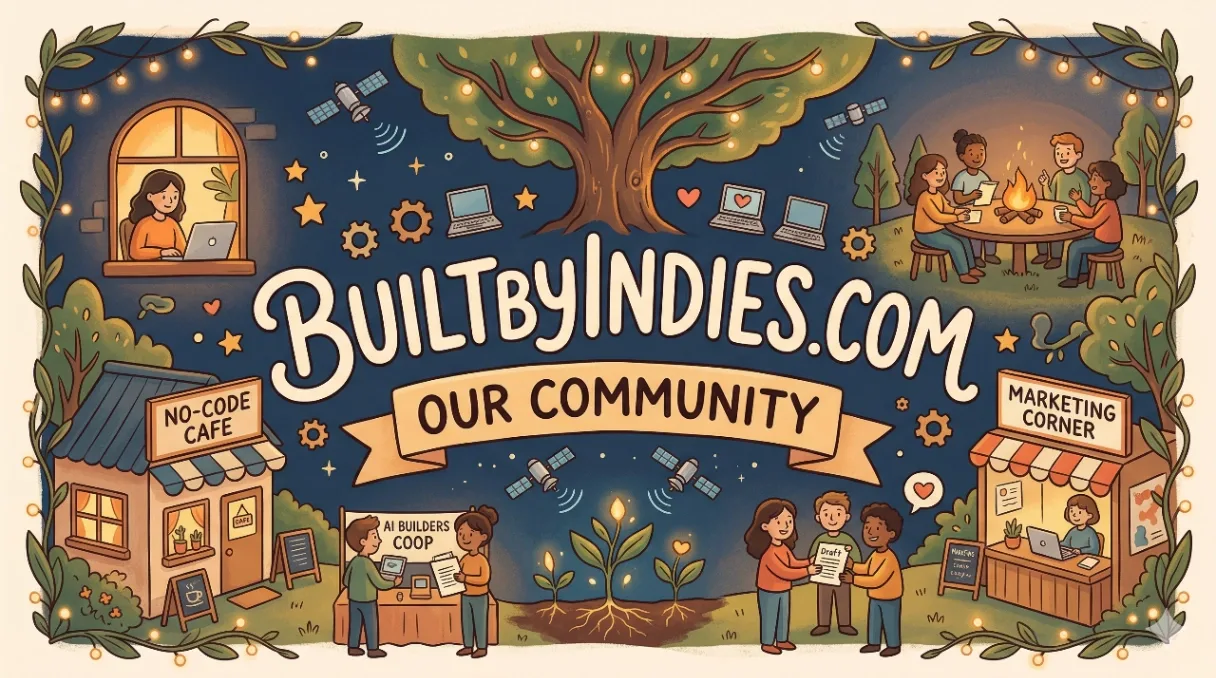
Builtbyindies focuses on early validation for indie projects and micro SaaS. You get a simple landing page, waitlist capture, and a targeted community that likes to try things early. It also functions as a niche showcase and directory, which helps long‑tail discovery.
Why that matters: you collect emails you own, recruit small beta cohorts, and iterate messaging before a public launch. That mix helps you move from idea to MVP validation without burning a loud launch too early.
Strengths we see repeatedly:
Setup that stays out of your way, so you keep shipping.
A focused indie audience with useful feedback and higher signal‑to‑noise than broad feeds.
Ongoing exposure through directory listings and community mentions that compound over time.
Trade‑offs are real. You won’t get a one‑day traffic surge, and you’ll still need external distribution for bigger jumps. Treat it as a base layer, not the whole plan.
Best fit: MVPs, pre‑orders, pricing tests, and niche tools that need conversation more than claps. If you’re still refining your hook or exploring willingness to pay, it’s a more forgiving arena.
Common Builtbyindies Workflows
Ship a tight landing page, connect a waitlist, and invite testers in small batches.
Test two versions of your positioning for a couple of weeks while sharing progress with the indie community.
Collect short testimonials and mini case notes to seed social proof for your public page later.
Pro tip: Keep the landing page sharp. One clear value proposition above the fold and a single primary CTA (waitlist or trial) tends to outperform sprawling pages. Unfocused pages convert poorly because they ask visitors to work too hard.
Product Hunt: Purpose, Strengths, and Limits
Product Hunt is a daily feed for product discovery. Upvotes and credible comments push you up category and homepage lists. Exposure concentrates in a single day.
Why it matters: concentrated attention can bring press, partner intros, and a credibility badge that shows up in searches for your brand. It’s widely reported to attract millions of monthly visits, with launch impact driven by the homepage and top categories.
Strengths:
Launch‑day momentum and broad reach across tech‑savvy audiences.
A public page you can share in sales, recruiting, and investor conversations.
A chance to turn warm early adopters into public advocates in the comments.
Trade‑offs:
Without a tuned funnel, the spike doesn’t stick. Cold traffic rarely converts without clarity and social proof.
Competitive categories and community norms that penalize vote begging.
The window is short; attention compresses into 24-48 hours.
Best fit: public releases, major updates, or relaunches with meaningful improvements and a clear story. If you can’t explain value in a 60-80 character tagline and back it with screenshots and a quick demo, you’re early.
How Launch Mechanics Shape Results
Timing and early engagement affect rank. Launching at 12:01 a.m. PT on a Tuesday or Wednesday tends to increase exposure. Weekends usually see less engagement. Thoughtful comments help more than empty upvotes, especially early in the day.
The window is tight. Most attention arrives in the first day, then drops to a trickle. Plan your emails and social posts around that reality, not hope.
Preparation matters. A concise tagline, a 30-60 second demo video or GIF, 4-6 crisp screenshots, a short FAQ, and active maker replies can be the difference between a top slot and getting buried.
Pro tip: Pre‑write answers to pricing, integrations, and roadmap. Fast, clear responses win trust and save cognitive load on launch day.
Builtbyindies vs Product Hunt: Side-by-Side
A quick map of outcomes and trade‑offs helps clarify the path.
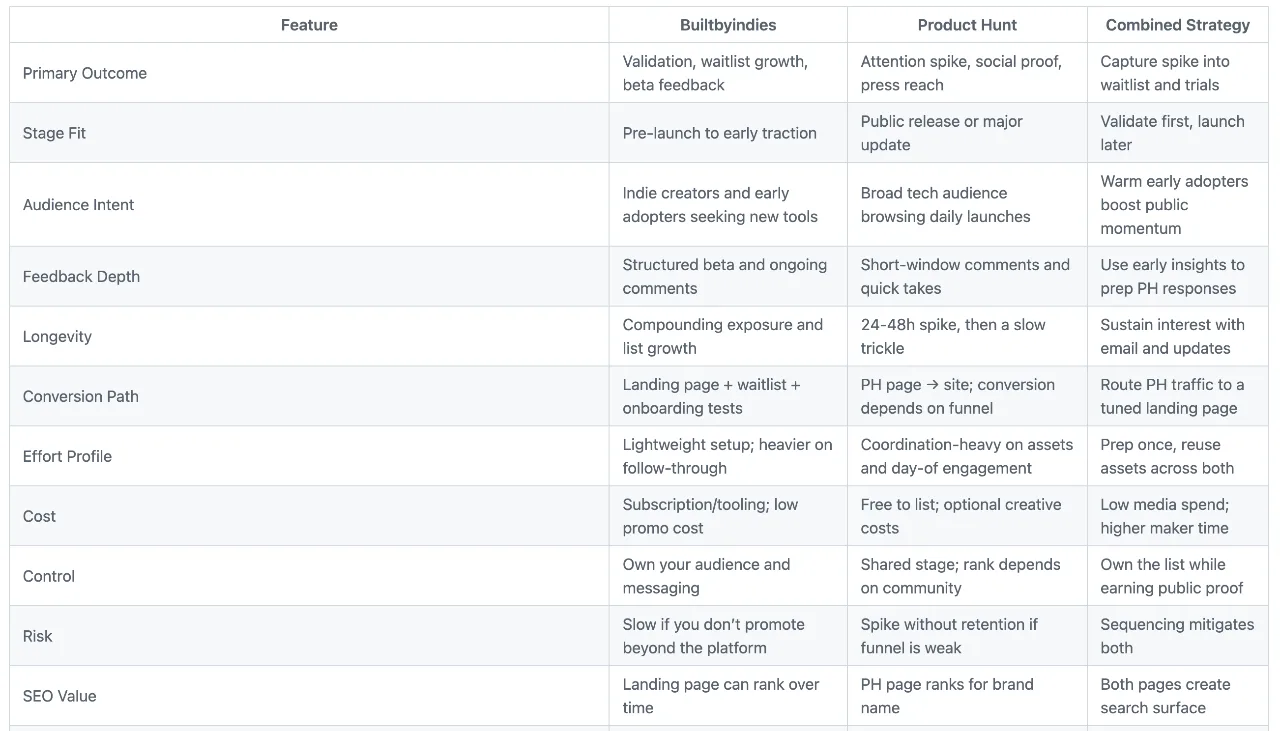
The takeaway isn’t either/or. Use Builtbyindies to build proof and a waitlist. Use Product Hunt to turn that proof into a public moment.
Pick the Right Tool for Your Use Case
Different goals call for different channels. Match your stage and assets to the job.
Validate a Business Idea
Stand up a concise landing page on Builtbyindies, capture waitlist signups, and ask two simple questions (use case and priority feature). Connect to your email platform so you can segment and follow up.
Run simple headline tests by sharing two versions of your page across a few communities over a couple of weeks. Track basic metrics so you can see what resonates.
Delay Product Hunt until you can show outcomes. A few beta quotes, clear use cases, and confident messaging will lift conversion and improve the quality of comments later.
Beta Testing and Early Feedback
Recruit 30-100 beta testers via Builtbyindies and adjacent indie communities. Onboard in small cohorts to keep support manageable. Instrument a few key steps so you can see where activation drops.
Set expectations and a feedback cadence. Ask for one key action in‑product and one short survey. You’ll typically see a healthy share of waitlisters activate when invited; tight loops and small incentives push that higher.
Share progress updates so the community feels part of the build. Those testers become your strongest Product Hunt commenters because they have real context.
Public Release and Announcement
Use Product Hunt once onboarding is stable, pricing is clear (or your free tier is strong), and your story is tight. Prepare the package: a 60-80 character tagline, a short demo, and 4-6 screenshots.
Bring your waitlist and beta testers to the conversation. Ask for feedback and questions rather than votes; it’s better for ranking and better for learning. Coordinate posts and send two or three short emails to your list at thoughtful intervals.
Route traffic to a tuned landing page first, then to signup. Track Product Hunt separately from other sources so you can see what actually drove trials.
Niche Micro SaaS and B2B Tools
If your buyers live in specific communities, give priority to Builtbyindies plus niche forums and targeted outreach. Many B2B tools get more value from ten right‑fit beta testers than 1,000 casual visitors.
Treat Product Hunt as a credibility milestone. A solid placement and a thoughtful comment thread help in sales decks and on your homepage, but don’t expect it to be your primary acquisition engine for a specialized audience.
Considering AppSumo Alternatives
Lifetime deal marketplaces can drive volume quickly, but they require steep discounts and create support spikes. They’re tools, not shortcuts.
A Builtbyindies + Product Hunt sequence builds owned audience and proof without heavy discounting. If you pursue deals later, arrive with a validated funnel, clear capacity, and guardrails on feature promises and support.
Pro tip: Set a few realistic metrics before you ship. Visits, waitlist signups, beta activation, and trial starts keep you honest and prevent vanity‑chasing.
A Combined Launch Playbook (4-6 Weeks)
Week 1-2
Publish a Builtbyindies landing page with a waitlist and a short survey.
Seed your first 50-100 subscribers from Builtbyindies, friendly communities, and your network.
Recruit a small beta cohort and track a handful of activation steps.
Week 2-3
Iterate messaging and onboarding based on beta feedback.
Capture two or three short testimonials and add them to the page.
If pricing exists, test a simple early‑access offer.
Week 3-4
Build your Product Hunt assets: tagline, demo video or GIF, screenshots, and a maker’s comment that frames problem, solution, who it’s for, and what feedback you want.
Draft a brief FAQ. Prepare segmented emails for waitlist, testers, and partners.
Launch week
Schedule Product Hunt for 12:01 a.m. PT, ideally Tuesday or Wednesday.
Coordinate social posts. Engage live in the comments, ask for use cases, and answer questions directly.
Route visitors to a tuned landing page and then into a trial or onboarding flow.
Post‑launch
Email new signups promptly and invite the most engaged to quick calls or demos.
Share a public recap with what you learned.
Keep publishing progress updates; the long tail comes from continued momentum, not the single day.
Pro tip: Treat emails like a product. Segment by interest, keep updates short, and invite small cohorts to test changes before you announce widely.
Costs, Effort, and Risk
Product Hunt doesn’t cost money to list, but a strong outcome demands time: creative assets, maker availability, outreach to your community, and follow‑up. Plan a full day of active engagement and a second day of follow‑through.
Builtbyindies reduces setup friction for landing pages and waitlists. The work shifts to copy clarity, cohort onboarding, and closing the loop on feedback. That effort compounds into better conversion later.
The biggest risk is launching on Product Hunt without a funnel. Attention fades fast. If your landing page is unclear, your onboarding is brittle, or you don’t have a list to catch visitors, you’ll see a traffic spike and little else.
Key Takeaways
Use Builtbyindies to prove demand and gather emails before a public launch.
Use Product Hunt to announce, earn social proof, and kick off partnerships.
The winning move is sequencing: validate, then amplify, and keep the flywheel turning.
FAQ
Builtbyindies vs Product Hunt: which should I use first?
If you haven’t validated demand or onboarding, start with Builtbyindies to build a waitlist and collect feedback. Move to Product Hunt once you can show outcomes and tell a tight story.
Can Product Hunt be used for beta testing?
It’s designed for public releases. You can solicit feedback there, but the 24-48 hour window and broad audience make it noisy. Run beta testing through Builtbyindies and adjacent indie communities first.
Are deal sites like AppSumo good alternatives for early traction?
They drive volume, but at the cost of steep discounts and support load. Use them later, after you’ve validated your funnel and capacity, or use smaller deal platforms selectively. A Builtbyindies + Product Hunt sequence builds longer‑term equity without heavy discounting.